| |
| Saturday, 19 September 2026 |
| Highdown Revisited Project |
| James Sainsbury |
 |
James Sainsbury, Archaeological Curator at Worthing Museum gave us a very interesting talk about the recent dig at Highdown. Part of Highdown Hill is owned by the National Trust and is a Scheduled Ancient Monument. The area has been excavated several times over the last two hundred years. In 1892 the hill was owned by Henty, who wanted to plant trees at the top of the hill, to mirror Cissbury and Chanctonbury. As the workmen planted the trees, they discovered human remains, brooches, spears, glass vessels and pottery. They found 86 graves with bodies buried from 14” to 5’ deep, mostly E/W, indicating a Christian burial. Henty then took over the digging and discovered evidence of cremated remains. Sadly, he made no grave plan, so we are not able to link the individual bodies with the site of their burial on the hill. His digs were not carried out using the careful methodical manner of today’s digs. They would dig a trench, often using tools that sometimes damaged prehistoric items. Finds that had no monetary value were often thrown back in the trench as the next one was dug. Once exposed, precious items would quickly become fragile and crumble in the open air. So much was dug up at the time and then just thrown back into the trenches, muddling up the remains. Modern archaeologists keep meticulous records of every single find, not just a description of the item, but its exact position and depth of burial. They take extreme care when lifting articles and if they are not to be retained, ensure they are reburied in the precise original position. An £18,000 GPS machine was purchased by the team, which can identify the exact GPS position and height of an artefact. Each specimen is stored with a raffle ticket. The partner ticket is placed in the trench in the exact position of the find. This can tell us a lot of information about people of this age. Modern technology can enable archaeologists to determine the age of the item with carbon dating; although at £400 a time it is expensive. As a result of their work, we know that Highdown was a fertile plain in the Middle Ages, with the tidal River Rife running through it. It was heavily forested and the earliest record found is a Neanderthal tool from 300,000 years ago. The Mesolithic finds are the most numerous, but there is no evidence of any settlements until 1000 BC. A hoard of broken Bronze Age tools was found and believed to have been buried by a smithy, with the intention of later recovering them to melt down to make new tools. There is no evidence of Saxons living on Highdown although we know that they did bury their dead there. There is evidence of a Roman Villa under Northbrook College. Many Roman coins have been found on the hill: Magnetius and Constantius II. It is suspected that the lower areas became dangerous to the rich Romans living there, so they decamped higher up the hill to be safer. A lot of pottery has also been found on the hill, much coming from the Arun Valley, but also imported from surrounding counties and some from as far as the European mainland. Checking through 7 years of police reports on holes dug on Highdown Hill has confirmed a lot of activity from treasure hunters with metal detectors plus significant evidence of dogs digging up bones and then reburying them. Both have caused damage to delicate artefacts and muddled up the relics. James and his team believed that there were important finds buried in Highdown Hill that were at risk of disappearing altogether if not saved. They undertook research to determine where to dig that might not have been previously disturbed. They then applied for sufficient funding to carry out a 6-day dig. The Project partners comprised National Trust Archaeology, Worthing Archaeological Society, UCL Institute of Archaeology who loaned the team their top osteoarcheologist, in case they came across human or animal remains on site. The project was also a part of the Council for British Archaeology’s annual festival of Archaeology. They also had 120 volunteers helping on site. All graves were dug in chalk and they discovered one woman’s grave which cut across three smaller graves which they suspect may be her children. In an 18m trench they named Vincent’s Barrow, they discovered the burial site of a 45 year old woman, about 4’ 9” tall. It was extremely fragile, too fragile to lift then, so they reburied it intending to continue to dig there at a later date. They hope they will be able to fund DNA testing to find out more about her. Was she part of the late Roman Community or a local who was buried at the same time as the romans, or perhaps an early Christian? She dates from about 680 to 750 AD. She appears to have been buried below her three children. The team also brought in their own trained Metal Detectorist teams who discovered over 450 items but also exposed extensive trip hazards created by dogs digging up the bones and reburying them! Some of the treasures can be seen in Worthing Museum. Of particular interest are the incredible glass vessels, some linked to Normandy, one 50 AD Egyptian. The Highdown Goblet has a Latin inscription “use me and good health to you”. It has a dark green glass base, evidence of a repair: glass beads dating from 450-520 AD; bird brooches of Frankish design and an empty port bottle found under the bones in a grave. The project involved the local community too. On Open Day 2000 people came along. Guided tours ran every day of the dig and attracted 150 people every day. They were visited by TV’s TIME TEAM. They will be returning to continue the dig in the last two weeks of July 2027. Even if you do not volunteer or join a Guided Tour, why not visit the site on one of their open days? Details of the Big Dig can be found on the Museum’s website @ Unearthing the past: The Highdown Big Dig 2025 | Worthing Theatres and Museum. Do have a look at the video which gives a better idea of the scope of the dig. Later next year, in late February, Worthing Museum will host a major exhibition showcasing the results of the Highdown Big Dig. In conjunction with this, they will be hosting a conference at the venue titled The Story of Highdown Hill, inviting speakers from across the country to discuss the multi-period history of this special landmark. Put these in your diaries. Heather Stone, 20/09/2026 |
|
| Tuesday, 28 April 2026 |
| Visit to Hinton Ampner |
| Barbara Lidbetter and Joan Pimm |
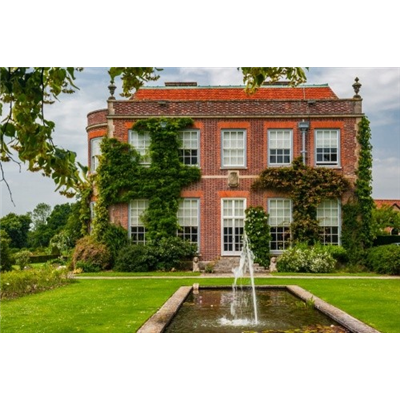 |
Hinton Ampner – visit on Tuesday 28 April 2026 Hinton Ampner sits within the South Downs National Park, and it was a lovely rural drive to reach our destination. We were met by one of the volunteers who had previously offered to take us on a walk around the gardens, and explain the history of them to us. He was very knowledgable, and many of the group joined him on his tour. Although there was an extensive fire in 1960, the house has since been lovingly rebuilt and restored by Ralph Dutton, 8th Lord Sherborne, to the beautiful Georgian mansion that you see today. On Ralph’s death the whole of the estate was left to the National Trust, with the house let to a family until 2014, and it was only then that the house was opened up to the public. Since then both the house and his collections have been lovingly restored. Whenever I visit a NT property I am always fascinated by the dining rooms and the china place settings, and I have included some photos taken in this particular room and close ups of the beautiful and highly decorated Worcester dinner service. The ceiling in this room is also spectacular and was well worth admiring during my time here. Walking around the various rooms I noticed that there were some fabulous chandeliers dotted throughout, which must take considerable time to clean every year – I’m so glad that isn’t my job! The weather improved for us during our visit and many of us spent time outside admiring the stunning views from various places around the grounds. A visit to the small church on site is also worth seeing. This was my second visit to this property, but I enjoyed it just as much the second time around – well worth a visit if you’ve haven’t been there yet. Barbara Lidbetter |
|
| Saturday, 18 April 2026 |
| Returning Beavers to West Sussex |
| David Elliot |
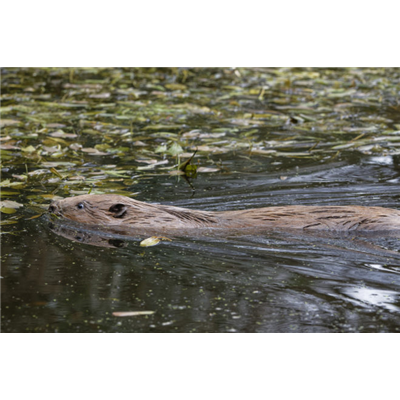 |
David Elliot is the Lead Ranger, South Downs West David’s work covers the area from Hazlemere, Petsworth and Petersfield. The information for his talk was drawn from the 2023 State of Nature Report. One in Six species in the area are in danger of extinction, but the startling fact is that we have never had a better understanding of the problems and the solutions to restore nature. The greatest drivers of environment changes on the land are due to changes in agricultural management and Climate Change. In the sea the drivers are unsustainable fishing and changes in marine development. One positive action has been the creation of protected areas, National Parks, SSSI’s, where nature conservation is carried out. Regular assessments are performed on the effectiveness of actions and in these protected areas, we have seen 94% effectiveness. Outside the protected areas, it falls to 38%. We need to be mindful of the danger of shifting baselines when checking progress. A fall in the cleanliness of our rivers is due to sewage pollution, agricultural pollution, and disconnected flood plains. Obstruction of water courses has been due to wildlife migration, silt deposition, wildlife depletion and invasive non-native species. There is no single solution to the environmental problems we are experiencing; we need multiple solutions, but beavers have been shown to deal with many of the problems in a fast and natural manner. Beavers are Riparian Mammals with orange-coloured teeth, due to the high iron content, making them very strong, capable of biting through hard wood. The teeth are constantly growing and need to be regularly worn down. They are fast swimmers and can stay underwater for long periods. Their diet is wholly vegetarian; they eat leaves, shoots, and mixed plant life, never wood from the trees they fell. They create feeding lawns of floating plants and wildflowers with pathways between them to swim along and make grazing easier. They even love Hemlock, which is poisonous to humans. They live about 8 years in the wild, in close family groups. The females have 2-4 kits every two years which will remain in the group until they are two years old, then they move away to establish their own group. They live in lodges, a high pile of sticks and mud. They dig tunnels so all the entrances to the lodge are underwater. Their only predators are bears, wolves, lynx and humans. As we have killed off the other predators, only humans remain as their sole predator, and we drove them to extinction in the wild about 400 years ago. They are keystone creatures. When a keystone creature is removed from an environment the whole structure collapses. We can never recreate that complex structure. Only returning beavers to the wild can do that. They only build this as a defence against predators. Beavers build multiple small dams which create larger ponds behind them, with multiple streams flowing through them. This has a positive effect on the fish population and is particularly suitable for salmon, who have developed the ability to jump over the dams to reach their spawning grounds. These dams are continually changing shape and size. The wet environment attracts invertebrate life, which encourages more bird varieties, and quickly a lush, biodiverse ecosystem evolves, which is self-maintaining. If the water source is large enough, for example a river, the beavers will not build dams. They feel safe in the faster flowing water. They want an environment where their feet are always wet; they do not like dry land. They will always live close to a river source; usually about 5 metres away from a river, a maximum of 20 metres. Which should not cause a problem for traditional farmers. The dams trap pollutants and silt behind them, cleaning up the streams. They are also valuable as water storage facilitators. During heavy rains, the water will soak into the land behind the dams, and then is slowly released, preventing flooding downstream. They do not fell all the trees in an area. If preservation of certain trees is required, this can be easily achieved. The cheapest solution is to paint the lower trunk with pva glue in which gritty sand has been mixed. They hate sand in their mouths. More expensive options are fixing a mesh cage around the lower trunk, or humane beaver traps can capture them for relocation. If it is important that the ponds they have created are to be maintained at a certain height, then introducing a series of pipes can deceive the beavers into keep making dams as water runs off through the pipes. Beavers are viewed as iconic animals, but humans, especially farmers, fear that they will cause massive damage when they live alongside us. Education and understanding how beavers live can make a big difference in tolerance to beavers living alongside humans. Beavers have been introduced throughout England; in Kent along the river Stour, in Sussex on the Knepp Estate. There are two applications locally that David is involved with, to introduce beavers along the River Adur and the River Rother. We can get more information on how we can support the reintroduction of beavers from Western Rother Beaver Group, Adur Beaver Group, Sussex Beaver Advisory Group. Heather Stone, 19/04/2026 |
|
| Saturday, 21 March 2026 |
| Paintings at Petworth |
| Dr. Emily Knight |
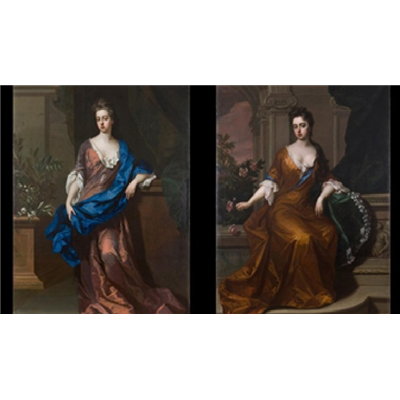 |
Women Artists at Petworth : a talk by Dr Emily Knight 21st March 2026 Dr Knight’s talk focused on two female artists whose pictures are exhibited at Petworth, Angelica Kaufman and Lavinia Fontana. They are the only female artists at Petworth, which reflects how few professional female artists there were 200 years ago and also how little they were valued by collectors at that time. Limited subjects were thought suitable for female artists; flowers, landscapes and still life; never nudes. Whereas male artists learned their skills under the tutelage of famous masters, females were usually taught by their family. Both pictures have been the subject of conservation and exhibition at Petworth. Angelica Kaufman was Swiss, born in Cher, Graubunden in 1741, died 1807. Her father was a skilled muralist and painter, using Angelica as his assistant, teaching her all the skills of painting. Her other passion was music and she was also a talented musician. They travelled throughout Italy, studying the masters and then moved to London. Angelica’s patron was Joshua Reynolds, who referred to her as Miss Angel. At 24, she was one of only two female founder members of the Royal Academy, and also the youngest. Woman were not permitted to play a prominent role in the academy. However, she did receive a single vote, on two occasions for President of the RA. Joshua Reynolds supported her application. She specialised in historical paintings and her work has decorated Frogmore House in Windsor. The picture at Petworth house is from the Shakespeare play, Troilus and Cressida. In the picture Cressida is portrayed as a strong woman, an active participant, not a weak victim. The painting was renovated and cleaned by a local Sussex expert. The whole conservation process of both the canvas and frame was shown in exhibition at Petworth. The opportunity was taken to understand more about other paintings in the collection. Samples of paint were taken and analysed. The frame is original and it was identified that red patches on it were similar to other frames in the north gallery. The canvas had stretched over the decades and was relined to give it stability. Damage from historic wood worm was filled in with fish glue and gentle heat. The varnish was carefully removed to reveal the original paint colours. Cracks in the paint were treated and areas retouched before gently revarnishing in several very thin layers. Treated areas of the frame were colour matched. They did not discover any new methods or materials, but they did find some lovely under drawing detail. Lavinia Fontana was born 189 years before Angelica in 1552, and died in 1614. She was also born in Italy and was the first female career artist, specializing in mythology and religious painting. She was the first female artist outside of the royal court or convents. Lavinia was also trained by her father and had her own studio. She was prominent in the School of Bologna. She was married to the Count of Imola and had 11 children, with only 3 surviving her. Her marriage contract included a clause that she would be permitted to continue painting in order to earn an income. She gained renown for painting Bolognese noblewomen. Her Portrait of an unknown woman seated in a chair is part of the Petworth Collection. This picture has also been the subject of restoration and exhibition. More was learned about the methods and materials during restoration. Very expensive materials were used for decorative highlighting, including silver. Projects at Petworth to enhance the Collection Relighting the Little Dining Room Good lighting is lighting that you do not notice. There had been many complaints about the lighting in this room, that in places it is too dark to properly see the collections, but too bright in other places. Instead of trying to emulate the original lighting, modern lighting has been installed to be discrete and show the exhibits to best effect. Funding conservation of 2 Gainsborough paintings The 300 year anniversary of Gainsborough is an appropriate time to conserve one large Gainsborough painting, plus a smaller one hanging beside a Richard Wilson landscape, which will also be treated. Updating Room Lists At the moment room lists only catalogue Petworth’s paintings. A project is in progress to catalogue all the items in a room wall by wall. This is likely to be a long term project Restoring the Petworth Beauties In the Original Dining room were two paintings by Swedish artist Michael Dahl (1659-1743) in the late 1690s, the recently restored portraits are of Rachel Russell, Duchess of Devonshire (1636-1723) and Mary Somerset, Duchess of Ormond (1664-1733) – two of the highest-ranking noblewomen in the court of William and Mary. In the 1820s, the 3rd Earl of Egremont, who owned Petworth, wanted more space for new art celebrating the Battle of Waterloo, in which his sons had served. He ordered that six paintings of the so-called ‘Beauties’ be cut to three-quarter length, declaring: ‘I will cut off their legs, I do not want their petticoats.’ Fortunately, the Earl’s workers chose to loosely interpret his instructions and the cut pieces were not thrown away but roughly reattached and then folded and tacked up behind the paintings. Their survival was only discovered nearly two centuries later when National Trust curators took them down in 1995 for conservation work. The paintings have now been restored, although the attachment seam can be seen. It is intended to renovate the room in which they are displayed with full length mirrors, similar to the originals, Baroque doors and pink walls. Visit the Petworth website for more information. Heather Stone, 22/03/2026 |
|
| Friday, 20 February 2026 |
| Uppark House: Characters Conservation and Restoration. |
| David Bridges |
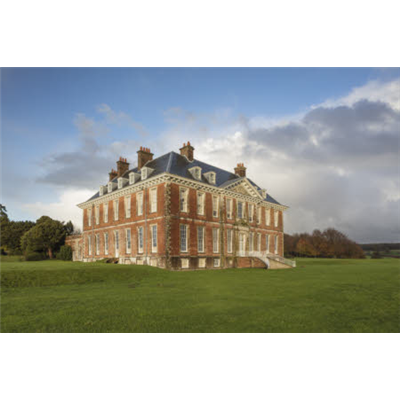 |
Uppark a talk by David Bridges: Friday 20th February 2026 The talk was entitled Uppark: Characters, Conservation, Restoration. David would focus on those characters who were seen to influence or have been influenced by Uppark; the pioneering textile conservation work undertaken by Margaret, Lady Featherstonehaugh,in the 1930’s; the restoration of the property following the devastating fire in 1989, including the restoration of the historic path network. Ford, the 3rd Baron Grey was married at 19, a father at 20 and in the same year inherited Uppark from his father. He was involved in a plot to kill the Duke of York at Newmarket races. He was arrested and taken to the Tower of London. He bribed the jailor with a meal and 14 bottles of claret to let him escape. He took a boat to Chichester and then on to Uppark, from where he escaped with his 15 year old sister through Somerset. They were caught in the New Forest, arrested and returned to London. He secured his freedom by naming the other conspirators. He was an ardent protestant and found favour at the court of William of Orange, later becoming an MP, famous for introducing the Law of Habeas Corpus in 1679. He built the second version of Uppark, in the Anglo-Dutch style of plain red brick. He died in 1701 before its completion in 1707. The estate passed to his daughter Mary, who died in 1710. Her son, Charles, inherited in 1722 and moved down from Northumberland to take over the estate. In 1747 he sold Uppark to the wealthy Sir Matthew Featherstonehaugh. The actual cost was £19,000, equivalent to £85 to £90 million pounds in today’s currency. Before the sale could go ahead, Sir Matthew had to agree to buy the Baronetcy and to move into the house with his family. Matthew and his wife Sarah were very rich, having made a fortune during the Industrial Revolution in the north. They spent over £16,000 on redecorating Uppark with fashionable new plasterwork ceilings, paneling and chimney pieces. With their friends Benjamin and Catherine, they did the Grand Tour of Europe between 1749 and 1751. They travelled to Calais, Paris, Burgandy, Avignon, Marseilles, and then into Italy, Naples, up and over the Alps. For this part of the journey, they either went by foot or were carried in a type of litter. They moved on to Florence, Rome and back to Naples. In Rome Benjamin commissioned four large paintings. These were carefully packaged, and shipped to England, taking many weeks. The smaller items purchased were brought back in their luggage. They came back laden with paintings, furniture and ornaments that can still be seen at Uppark They visited the famous town of Herculaneum, buried under the deluge of ash when Vesuvius erupted in 79 AD. It is nearly intact and lies near Pompei. The onto Venice, the Austrian Tyrol and return to England via Paris. Sarah was a talented water colour artist and some of her pictures can be seen in the house. Matthew also spent a lot of money on the house building a new stable block and kitchen extension. He was an MP and bought an expensive London house during this time, situated between Downing Street and St James Park. He died in 1774 and his son Harry inherited at the age of 20. In some ways he took after his father, setting out on a Grand Tour of Europe. However, he was profligate and spent £40,000 in Paris (£3m in today’s money). He was painted in Rome by Batoni. He developed a passion for Paris, fell in love with the city and also the 15 year old Emma Hart, bringing her back to Uppark as his mistress. (She later married Lord Hamilton and became Nelson’s mistress) Emma liked the country life and learned to ride and hunt. However, when she fell pregnant, Harry sent her away. Matthew employed Capability Brown to create the earliest part of the garden, including the wood and serpentine walks. Harry was persuaded to employ Humphrey Repton to further develop it, installing the new golden gates, a new driveway and a lot of the internal work. He was believed to be responsible for the Game Larder and the Dairy. In 1825 Harry married his dairymaid Mary Ann Bullock, 50 years his junior. He died in 1846 and she inherited his estate and ran it with her younger sister Frances. During that time a Mrs. Wells was the housekeeper, and her son Herbert George had free rein of the house and gardens. Neither sister married and it was bequeathed to several people before the National Trust took it over in 1954. Each family has tried hard to preserve the fabric of the house and its contents, even washing the 14 sets of curtains by hand. Most famous was the pioneering textile conservation work undertaken by Margaret, Lady Featherstonehaugh, in the 1930’s. The family continue to live in the house. In August 1989 a major fire broke out destroying a major part of the house. The Insurance Company paid out for a complete restoration which took 5 years, then a further one year’s work by the National Trust before it could be reopened to the public. Heather Stone, 22/02/2026 |
|
| Saturday, 10 January 2026 |
| Woolbeding Reimagined |
| Becky Hiorns |
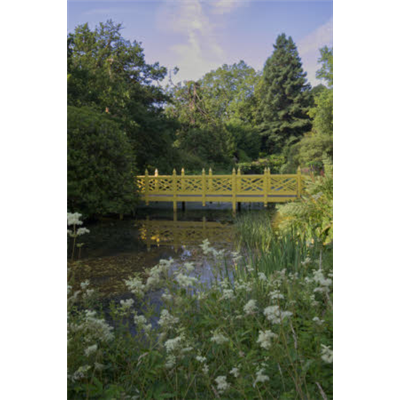 |
Becky Hiorns Project Manager of Woolbeding Reimagined gave a very interesting talk: The Woolbeding Estate was passed to the National Trust in 1956. It is located in the heart of the South Downs National Park. It is quite unusual as most of the National Park is chalk but the estates is on greensand and is located in the River Rother valley. The gardens are open from April to October and require booking tickets in advance. Both the house and garden are located by the river. Unlike the garden the common has open access all the year round. Woolbeding Estate is divided in three with the top part being common, the middle part has been arable farmed for many centuries and the bottom is the river itself that meanders through the valley bottom. It is located on the edge of Midhurst. The common is a mixture of wet and dry areas. It is covered in heather and bracken and originally commoners had the right to graze but this no longer happens. If it is not grazed the land would become woodland. Belted cows are now grazing the land with electric fences to ensure that the only graze particular areas. The Trust are looking into enable the cows to roam freely as they cannot do this at present. The middle part is the most eroded area in the country with gullies opening up due to the soil being very sandy. The Trust is trying to find ways to slow the water running off which ends up in the river. All the sediment needs to be removed to make it suitable for drinking as this is a source of water for a number of people. The farmer changed from ploughing the fields to drill seeding it instead. It is for this reason that the land is no longer farmed as this was losing organic matter and causing flooding issues. Another problems is caused by a weir which also prevent eels from moving up the river and also due to the sediment in the river. With climate change causing changing rainfall patterns and heavier rains this will result in more flooding. The New Vision is for the period up to 2050 and is trying to bring back nature to the landscape and to get people out to enjoy nature. Ambition: To help people and nature thrive. Restore nature, not just on National Trust lands but together with partnerships affecting the wider landscape. End unequal access to nature, beauty and history. To inspire millions more people to care about their surroundings. To renew the Trusts way of work, working with other groups such as those with dementia. Helping Nature More diversity, let nature recolonise the land, stop deer grazing, there are 80 cattle grazing on what was a field. This will put more organic material into the land. This also holds carbon which helps with climate change. Hay bales have been rolled out with seeds in them as the hay was cut after the flowers had bloomed. This spreads the seeds to recolonise the field. Some will pass through the cows as well as falling out when moving hay the bales. This last year there was a good acorn harvest as well as a mast one. These have been planted across the landscape and there are oak seedlings growing. These need to be protected to stop the deer from eating them. One area was covered in foxgloves and the seeds were collected to spread them to the south of the estate. A propagation unit has been set up to propagate rarer plants. At one time brooms were made from gorse which managed the amount of gorse growing on the estate. The cattle feed outside all year round so that they do not need to use imported food. The scrub is managed on the common so the cattle can graze. A stock proof boundary needs to be created so that the cattle will be able to move freely around. At present they wear collars which deliver an electric shock. It sounds music three times should they stray from the area they should be grazing and the fourth time it delivers an electric shock to prevent the cows. Volunteers are scrub bashing, in other words, removing it from the common. They are also involved in other activities such as counting butterflies between April and October. This information is included in the figures published nationally. They will walk a transept to count the same area each week to gather this data. The volunteers are also recording the movement of the butterflies as some are now being found further north than before. The work being carried out is creating more wildflower meadows. By improving access and creating new permissive paths working with the local community to create the new paths where required for both walking and riding safely, some routes have been moved. The local community were able to explain where the existing paths were unsafe or dangerous. This has been carried out to encourage more exploration of the countryside. No herbicides have been used starting in 2025 just grass cut to create paths and flowers have been coming back on their own. Some species have disappeared in the past 50 years so a decision was taken to identify 100 species that are either missing or struggling. For the lesser spotted woodpecker who need more standing dead wood, the environment needs to be managed to help them recover. These have been found both south and north on the estate. The sandy lizard has not been found on the estate so a breeding programme needs to be set up so that they can be reintroduced to the site. This is to haven soon. Reintroduction of species that are missing can only happen once the habitat has been restored. Hares have not been seen but these might come back naturally. Barn owls have been seen but to help the more nest boxes have put up. The vole population on which they feed has increased due to the changes already made on the estate. Spreading bellflower, a beautiful blue flowered plant, was present in Victorian times and it is hoped that it can be propagated and then planted to get them back. Another species that is needing help is the yellow meadow ant, this species takes the eggs of the blue butterfly into its nest, they produce mounds in the grassland and without the ants there would be no blue butterflies. There is a need to work out the balance to create the habitat required for species to return. Work needs to be carried out to reconnect the river to the flood plane, remove the weir and this will then recue the flooding. Black poplars will need to be propagated so that they can be returned. The river vole has disappeared but before they can be returned the correct landscape will need to be created and this will have to be carried out with other organisations. It is possible that they can then be reintroduced. Golden eagles are also missing from the landscape, they are only found in Scotland as they have disappeared they will need help to be reintroduced. Another exciting prospect for the future is to reintroduce red squirrels this will be in conjunction with curbing the grey squirrels as red squirrels would have been found in this area. Bridges will need to be built across roads, the lanes are narrow, this will enable wildlife and humans to give them access to the countryside. They will find uses for the farm buildings. Thus they will be creating a new landscape and a new way of working. Also encouraging children to enjoy the landscape so that when they grow up they will continue to visit the countryside. At present there about 20 to 30 orchids, once the soil is restored and the eco system will be in sync, orchids will be found over all parts of the landscape which will show a thriving area of land. Further information from the questions and answers session - this area of land was first settled in the Anglo-Saxon period, settled by the Wolf-beard people. It was the area where wolves were found and was farmed. It is hoped to reintroduce pigs, rather than wild boars which would have roamed originally, wild boar can be unpredictable so pigs will be a safer option. Also ponies can be returned to this area. |
|
| Saturday, 22 November 2025 |
| The Vanished - tales that bring our country houses alive |
| Rowena Willard-Wright |
 |
The talk is titled 'The Vanished - tales that bring our country houses alive.' Rowena will share the stories that she has met in passing and pondered over in her twenty-five years of being a curator - from favourite perfumes, when is a Currie, not a curry, and the significance of the sound of bells. |
|
| Thursday, 30 October 2025 |
| Irregular Forestry, woodland and a wildlife trip to Poland |
| Lisa Trownson and Lee Walther |
 |
A talk by Area Rangers Lisa Trownson and Lee Walther regarding Irregular Forestry, woodland and a wildlife trip to Poland. |
|
| Saturday, 27 September 2025 |
| Friends of Wolstonbury |
| Mike Botterill |
 |
Mr. Botterill's talk will about the 'Friends of Wolstonbury'. Wolstonbury Hill is located within the South Downs Area of Outstanding Natural Beauty (ANOB) close to the villages of Hassocks, Hurstpierpoint and Pyecombe. It is described as a jewel in the crown for its orchids, and the Friends of Wolstonbury have carried out conservation work and surveying of the site since the group was formed in 2007, helping to restore the rare chalk grassland across the site. |
|
| Tuesday, 03 June 2025 |
| The Vyne - coach trip |
| Joan Pimm |
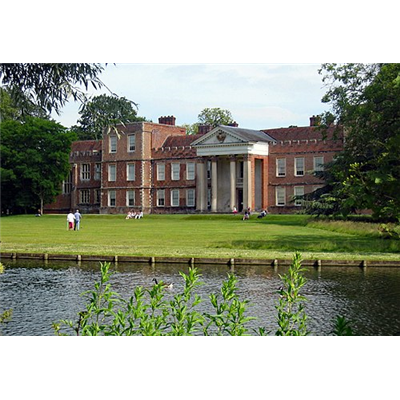 |
THE VYNE – COACH TRIP Our trip to The Vyne was chosen by my co-organiser, Barbara who sadly was unable to come to visit this amazing National Trust property. As we had chosen a quiet day, the staff at The Vyne very kindly allowed us to park the coach in their car park for the duration of our visit. (Usually there is insufficient room). We were provided with a courtesy vehicle to take the ones that needed help as the walk to the house was flat but quite a distance. Two members of their very knowledgeable staff led us on a very interesting tour and talk about the history and features of the house. Part of the upstairs was closed to the general public but we were allowed to visit with our respective guides. The highlight for me was the decorated Tudor Oak gallery that had been visited by King Henry VIII with two of his wives. I felt that we were holding hands with history as you could just imagine them in this wonderful room. It has been beautifully restored to reveal the 406 carved panels. We did have to dodge a couple of rain showers but the café was a welcome place to shelter and the food was very good here. I would certainly like to go back and spend more time there to take in more of the historic atmosphere. Joan Pimm |
|
| Saturday, 26 April 2025 |
| AGM followed by a talk on South Downs Deer Management and Northwood |
| Katie Archer and Andy Mott |
 |
After the AGM we were given two interesting talks: Firstly, one on the South Downs Deer Management Andy Mott is the Wildlife Manager for the South Downs in East Brighton. He managers 8 Stalkers, holds a Deer Stalking licence and covers the area of Slindon, Drovers. Harting, Woolbeeding and Ashcombe Bottom. There are three types of deer in the forest, of which the largest is the Fallow Deer. They are transient breed which makes them difficult to manage. The second is Roe Deer, a solitary native species. They are territorial and easy to manage. Finally the smallest deer is the Muntjac a non-native species. They are fertile at six months old and breed all year round, so numbers can increase rapidly. We need the deer in our forests but numbers must be limited as they can have a detrimental effect on the trees. They can remove all the leaves and bark from the lower part of a tree, killing the tree, as well as clearing low shrubs and removing habitats. To check on deer numbers the managers carry out regular habitat impact surveys using thermal image night counts and funded drone surveys. The target deer population is 10 per km2. In Central Downs it is 25 per km2 and in East Downs it is 33 per km2. In Scotland the population is 2 per km2. National England and Sussex Woods have funded a Pilot Project to encourage Virtuous Venison. They have provided high seats for safer shooting of the deer and to improve the ride for better opportunities for shooting. The meat from the culled deer is sold as Venison. The National Trust are competing with local farmers for the sale of Venison. The NT are trying to get a market for the meat in schools, prisons and Universities. They also supply Charities such as Fair Share and the Felix Project. The taste of Venison will vary depending on the variety of their diet, and for wild deer this will vary with the times of year, different plants growing and flowering in different seasons. The 1987 storms aggravated the deer overcrowding problem, with the loss of so many trees. The South Downs invested in a £100,000 chiller to store the meat. They will cull more female deer to manage the numbers, but social hunters prefer male deer as they seek antlers to hang on their Walls. Visit the Slindon Estate website on the National Trust for more information about Deer Management on the Slindon Estate. The second talk was on Northwood's 10 year Anniversary Katie Archer, Lead ranger from the Slindon Estate, Downs Central, talked about the 10th Anniversary of the Project to return Northwood to a wooded landscape, reconnecting woods that have been cut off from each other since the First World War. John Springthorpe-Hunt made a bequest to the NT that provided funds to future proof this small area in the middle of the Slindon Estate, against climate change, pests and diseases. The work has been through natural wood creation, wood pastoral creation, and a small hay meadow. The new farm tenants are working with NT on the project. A colour coded plan was prepared for specific species planting in some areas. It was discovered that those areas developed by Natural Regeneration naturalized more quickly than the specific planting method. The Wood Pastoral creation was supported by the tenants who grazed their cattle extensively in the area to support the process. Rather than using physical barriers such as wooden fencing, electric fencing was used. This was less obtrusive on the farmland, and quicker to move the barriers to allow the cattle to move to fresh pastureland. The cattle could wander more naturally and were easily located on mobile phones. A new pond was created on the land, barn owl boxes sited and new hedges planted. Community involvement was very important with over 1,000 local people involved, especially the local schools. Two archaeological digs have been carried out on the area. A hide/lookout has been built in the center of the land for observation and also educational purposes. Already new wildlife has been attracted to the variety of habitats: barn owls, adders, a variety of invertebrates, mammals, snakes and birds. They hope to site Totem Pole Carvings soon. Look at the NT web page for the Slindon Estate to find the rise of Northwood Ramble at Slindon, a free circular walk on the Estate. |
|
| Tuesday, 22 April 2025 |
| Scotney Castle - coach trip |
| Barbara Lidbetter and Joan Pimm |
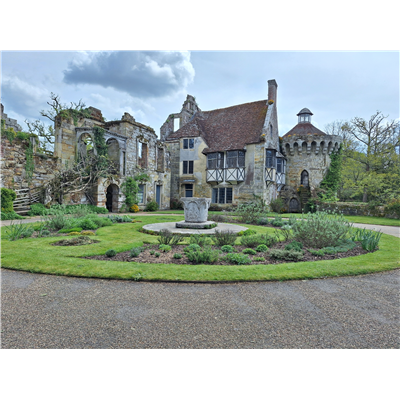 |
Our first coach trip for 2025 was to Scotney Castle, and we certainly picked the most perfect day for it. The sun was shining from the moment we boarded the coach, which put a smile on everyones face and a spring in their step. Due to ongoing roadworks along the A27 we took the scenic route inland, and everyone commented on how lovely the ride was. Upon our arrival at Scotney we were met and given maps, with the offer for those who wanted it, a guided tour of the gardens led by one of the garden staff. Many took up the offer and thoroughly enjoyed it. Scotney is built in a valley and the ruined old castle is right down at the bottom, with a steep path leading down to it. It is well worth the trip as the site is both romantic and beautiful, with a large lake surrounding the building. The walk back up is harder but I was pleased that I had managed it, and the view looking back down was stunning in the warm spring sunshine. The house was built between 1837 and 1843 using stone dug from the quarry in the garden, and is a lovely looking building. The Quarry has since been incorporated into the garden planted up with ferns, spring bulbs and azaleas. Once inside the house we were able to wander through both the ground floor and first floor rooms at our own pace, with many of the personal items of the Hussey family on show. The Library is particularly grand and is where Christopher Hussey would research articles for the Country Life magazine. This was my second visit to Scotney, the first was around 12 years ago, but it didn't seem to have changed very much, and I for one am pleased that it hasn't as it is such a beautiful site which I don't feel could be improved upon! Barbara Lidbetter |
|
| Saturday, 29 March 2025 |
| Petworth's current archaeological dig |
|
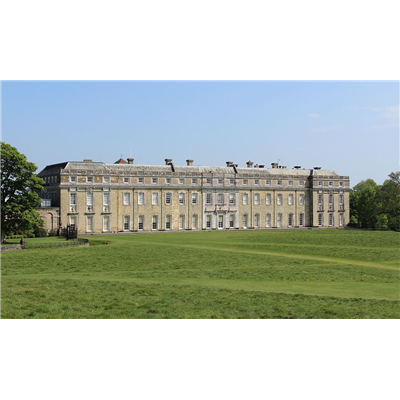 |
Unfortunately, this talk was cancelled. |
|
| Saturday, 22 February 2025 |
| Odiham Hunting Lodge |
| Rowena Willard-Wright |
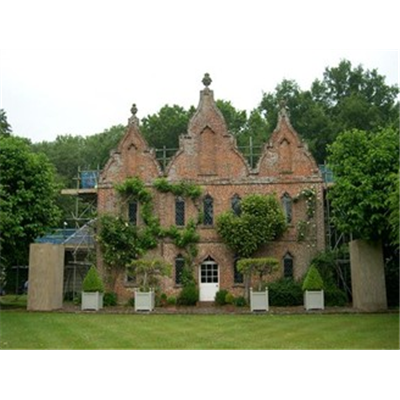 |
Rowena Willard-Wright is renowned for her contributions to the arts and cultural heritage sectors in the Southeast of England. Over the past 25 years, she has cultivated a reputation for her innovative and inclusive approach to curation, emphasizing the importance of accessibility and uncovering and telling lesser-known histories. Ms Willard-Wright has served as a curator for both English Heritage and the National Trust in the southeast of England, working at many properties such as Osborne House, Knole, Ightham Mote, Sissinghurst, Battle Abbey and Walmer Castle. During the Covid-19 pandemic, she took on the role of project curator for Runnymede, where she reimagined and retold the story of the Magna Carta. Her work not only highlighted its historical significance at its place of creation but also examined its global impact. Additionally, she conducted extensive research on the history of the Hunting Lodge at Odiham, delving into its origins and its later significance as the home of two of Britain’s top interior designers, John Fowler and Nicky Haslam. In this talk, she provided an overview of the Hunting Lodge's original use as a gamekeeper’s home and folly within a larger 18th-century estate. She then explored why this unique property attracted Fowler and Haslam, and how it inspired their creative visions. Additionally, she discussed the garden, which was as integral to Fowler’s love of English design as his interiors, and what continues to make this hidden gem an important part of the National Trust’s collection. The property lies just off the M3 past Farnborough and is well hidden. The last royal visitor was Queen Elizabeth I when it was a Royal Deer Park. The house was built in the 18th century and was designed as a decorative feature. Little is known about those early years, but as it has a fireplace it was presumed to be used for banquets as well as the new sport of Deer Coursing and hunting. It was completely surrounded by a wide ditch, probably to prevent the deer from getting out. It was possibly a Game Keepers Lodge until the first Word War, when Elspeth Pick came to live in the property. At the time it had no road access, no water or electricity. She was from high society and entertained in the house, until she became bankrupt and left to open a nightclub outside Salisbury. The property was purchased by John Beresford Fowler, also from high society, and a well know and fashionable Interior Designer. During his career he worked for Peter Jones in Sloane Square, where he was head of their furniture studio. He specialised in the neo-Georgian style. He formed the Colefax Fowler business when he worked with Sybil Colefax. During the time he lived in the house he not only redesigned the interiors in a similar style to his work for the peerage and royalty, but using techniques that produced a similar effect at a fraction of the cost. It was a time of rationing, with many resources in short supply. He would use MDF panels and paint them to replicate features such as pediments or expensive alcoves, all artifice. He used the “three colour trick”, using just three shades of a colour to create the illusion of panelling. He would copy fabrics that he found in the Victoria & Albert Museum. He extended the Lodge, building Elm Cottage as accommodation for his guests. Nor was the garden neglected as he laid out beautiful “Garden Rooms” staged so you could look out of a window and the garden appeared as a picture. In the 1980’s the Lodge was occupied by Nicky Haslam who was also an interior designer and keen to use the Lodge for entertainment. He put his own mark on the house creating warmth by using terracotta colours and lamps. He liked to ”paint” wallpaper on the wall, even including a line to replicate the edge of the wallpaper. In 2019 the property was handed over to the National Trust on Fowler’s death. Francis Sultana lives in the Lodge on a long term let. He is also an interior designer; the Hollywood Regency in a different way, being his style. Nicky Fowler referred to Odiham Lodge as the Fairytale in the wood. Sadly, there is no public access to the Lodge at the moment, but it is hoped that the National Trust can arrange an Open day later this year. Description: Grade II listed: Listing details
Late C18. A 'folly' or 'cottage orne' large cottage facing south-east towards Dogmersfield Park; 2 storeyed plain structure with an elaborate main façade of 3 gables (with wider taller centre) containing panels, a first floor of 1.3.1 windows, and a ground floor of 1.1.door.1.1 windows. The rear brickwork has projecting 1st and 2nd floor bands, a plinth, and a band surrounding the outer edge of the front. The gables have a slender ogee or Dutch shape, with finely-carved stone vase finials. The panels, windows and wider central doorway have a raised brick frame with ogee heads and cusping. Leaded casements. On the west side is an attached entrance block of 1 storey, with a pyramid roof, and timber clad walling in imitation of V-jointed rusticated stonework: the north face has a Doric doorcase with a full entablature, with triglyphs, fluted pilasters and a 6-panelled door. Heather Stone, February 2025 Image: HampshireLive, Grahame Larter |
|
| Saturday, 18 January 2025 |
| Alfriston Clergy House |
| Holly Jones and Alex |
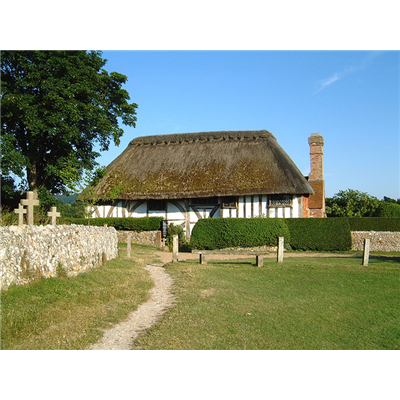 |
Holly Jones started the talk by providing information regarding Alfriston Clergy House The property was in a poor state 150 years ago but without The National Trust saving this property, The Trust would be a completely different organisation from the one it is today. The property was divided in two and in the 1860s Mrs Harriet Coates lived in one part. Looking at the photographs it can be seen how the property became more and more in a state of disrepair. The other part was occupied by a river barge master. Mrs Coates was a bell ringer and village laundress. The property was purchased by the Church of England, they were going to demolish it but Mrs Coates pleaded with them not to demolish it until after she died. The Rev F Benyon loved the house so he raised money to save it. He contacted the Society for the Protection of Ancients Buildings (SPAB) to help. Repairs were made but concrete was used, which has now been replaced with wattle and daub. He started some repair work without having sufficient funds to cover the cost. In 1895 SPAB suggested he contact The National Trust and thus the charity became the one we now know. It would have been a completely different one if it had not purchased this property. On 19th February 1895, Octavia Hill invited the Rev Benyon to attend an executive meeting. She had visited the property and was determined to save it. The property was sold to The Trust on 16th April 1896 for £10.00, which is about £1000.00 today. Documents confirming details of the meeting and actual purchase where shown. It actually cost £300.00 to repair the property. It took up to 1898 for all the restoration work to be finished. This was made possible due to fundraising, writing to potential donors such as the Duke of Westminster for donations. The Clergy House is the first building to be saved, first fundraising, first restoration, and first opened. There is a bench dating to 1905 and this was the first item in the collection. Francis Dodd was a tenant, as well as Sir Robert and Mary Witt. There were all artists so they created paintings of the property as well as photographs. The Courtauld Gallery were given the art collected by the Witts. The property was put back to the way it would have looked in the medieval period. It has now been dendrodated which gives a date of 1399 to 1407 for the building of the property. At the time the Priory (Michelham Priory) built two properties in the village, this, the priest house: a typical hall house: was the grandest house in the village. It took two years to build. Two hundred trees were felled in the spring and summer, it was built in the carpenter’s yard, marked, taken to the site and then rebuilt. As the property is damp, death watch beetle has been found. Part of the problem is the floor that was laid, constructed from sour milk and chalk. This makes the building damp so needs to be replaced. As part of the ten year plan which was finished last year, it has been decided to revert to an open floor. There is also a problem with the wrong paint on the walls, this too needs to be replaced with lime wash. When inspecting the walls it was discovered that visitors had written on the walls. To prevent this a visitor’s book was obtained. Some of the carvings of oak leaves could be an inspiration for the actual oak leaf that the National Trust used from its design in 1936. There are ogee doorways showing it is a high status building and was never used as a farmhouse as has been suggested in the past. New lighting is to be installed which will enable visitors to see the rafters. At one point Henry VIII owned the house following the dissolution of the monasteries. It became a property of Anne of Cleves as part of her divorce settlement and the Church of England. Hugh Walker was the vicar, he had eleven children and during this time the house underwent some alterations. A staircase was installed to create two floors. Glass was added to the windows. What was the priest’s bedroom has been set up as Mrs Coates’ bedroom which had been part of telling her story. The reading room set was up to show how it had looked in the 1920s. There was a photograph for them to see how it looked at this time but another photograph has been found showing it as a kitchen so it will now be recreated as shown in the photograph. The garden covers one acre and was set up as garden rooms like Sissinghurst Castle. It has been kept as close to the view Octavia Hill saw when she visited the property. Grass snakes, dragonflies, kingfishers and humming bird moths can be seen in the garden. Unfortunately, the garden is subject to flooding as water flows down from the village. At one point the garden room was flooded. To prevent this a reed bed and pond are planned which should stop water from coming into the garden. In 1987 the garden lost a few trees in the orchard. The rose terrace is maintained to keep the Edwardian feel. Robert Witt brought back a terracotta pot and this remains in the garden. There is an Italian garden and a sunken garden. From 1977 the house has been fully open as the last tenant had died. It floods every year. The kitchen garden is a huge project for this year. There are eight big beds with rotting sleepers that need to be replaced. There has been nothing done since the 1920s. The plan is to make the beds more easily accessible, provide easier access to the compost heap and to stop it from flooding. Fortunately, a legacy of £70,000.00 has been received, which will fund the redesign of the kitchen garden. The property is open Friday and Saturday only but private groups and schools can visit on a Thursday. Alex then talked about the events planned for 2025. Eight thousand people have visited against a budget of six thousand. They have won a visitor satisfaction award and Holly and Alex went up to London to receive it. For the first time the property will be open Good Friday to Easter Sunday. Alfriston Clergy House has paperwork dating back to 1894. They have a full diary of events from once a month walks to apple tasting days. These are picked in the orchard and some are sold. An expert (Ian Lamb) is on hand to identify apples brought in by visitors. In 2023 £250.00 was raised with the sale of apples. Some events are put on as part of the village events. At Christmas they have planned an electric candlelight event, where carols are sung with the money raised going to the church. (St Andrew’s which is nearby.) The first estate given was Barrington Court where Alex worked and now she works for the first house bought. Further information can be found on the Alfriston Clergy website, Facebook page and Instagram. Author: Kathryn Best |
|
| Monday, 02 December 2024 |
| Christmas Lunch at Casa Ciro |
| Barbara Lidbetter |
 |
CHRISTMAS LUNCH A Christmas Lunch has been booked for our members at the Casa Ciro Restaurant for Monday 2nd December at 12.30pm. Click here for a copy of their extensive menu. Click here for a booking form, which can be either posted directly to Barbara (details on the form) or handed to one of the committee members at our next meeting on Saturday 26th October. Joan and I are hoping that many of you will be able to join us; it was a very enjoyable, festive event last year. |
|
| Saturday, 30 November 2024 |
| Gertrude Jekyll and Munstead Wood: the home of the ‘artist-gardener’ |
| Dr. Caroline Ikin |
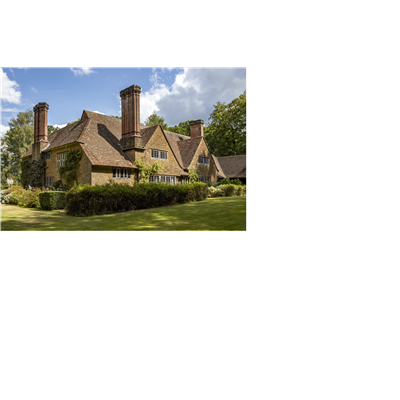 |
This property was bought by the National Trust last April and Dr Ikin has spent many months researching the plans of the garden, travelling to the University of California, Berkeley who have The Jekyll collection, which includes presentation drawings, planting plans, plant lists, surveys, photographs, and correspondence relating to residential gardens throughout the United Kingdom as well as photograph albums contain studies of landscapes, gardens, floral arts, plants and rural subjects, and portraits. The greatest number of photographs represent Jekyll's own garden at Munstead Wood. These photographs and planting lists will enable the National Trust to reinstate the garden so that it will return to her original vision. She began to design the garden whilst living with her mother in her mother’s house, leaving a gap in the garden for the house to be constructed later. The house was designed by Sir Edward Lutyens with whom she worked on a number of gardens where he designed the house. She could be described as an artist as well as a garden designer. Her house has been in private ownership for over 70 years and was restored in 1990 but now needs a further restoration. Unfortunately there are no parking or facilities which is something that the Trust needs to address before the garden can be open to the public. Miss Jekyll grew up in Surrey until her father inherited a house in Berkshire. After he died she and her mother returned to Surrey to live. She attended art school and created many water colours, she also travelled to Italy, France and Switzerland and had a wide circle of friends. The house was built about ten years after she began her garden. Her mother died in 1896 so she had to move out of her mother’s house which prompted her to build her own one in the space she had left for it. She referred to herself as an ‘artist-gardener’ with an understanding of colour theory that she applied to her garden designs. She was making pictures with plants, using colour, form and shape. She was a self-taught photographer, and experimented with photography. In her home she had her own dark-room in the cellar of her house. Many of the images of her garden are held by the University of California, Berkeley. There are 2000 images. The photographs she took were used for publications to illustrate her articles. The house was designed with a large workroom on the ground floor and she created the decorative scheme for her own home as well as for friends and family. She was commissioned to create panels for Eaton Hall, Cheshire, the home of the Duke of Westminster. Next to her workshop she had a flower shop where she could arrange flowers to go with the décor of her house. She commissioned vases if she was unable to find the shape that she required, and they were sold, commercially, as Munstead Glass. Miss Jekyll collected information regarding Surrey life and vernacular. This she presented to the local museum so that the traditions would not be lost. She also gifted textiles to a museum and gifted her ceramics to Godalming Museum. Miss Jekyll wrote articles for two magazines, published by William Robinson, The Garden Magazine and Gardening illustrated for Town and Country. She was a prolific writer writing a book a year. She was hugely influential. She designed 400 gardens including those for family and friends. Some of these alongside an architect. As she had her own plant nursery she could provide all the plants the gardens required as well as designing the garden. She employed 4 to 5 gardeners but there could be more when particularly busy. She worked in a professional manner but called herself an amateur. Miss Jekyll bred plants and named them. Many of her ideas are still used today. The garden covered 15 acres of land, with sandy, Surrey Heathland. She applied Arts and Craft principals bringing in the trees from the surrounding area. After her death, her furniture was sold in 1948 so only the fixtures and fittings remain and her own work in the house. The garden was simplified in the 1950s with the beds grassed over. The formal area, summer house, potting shed and lived in cottage on the site but not all are in National Trust ownership, the kitchen garden and nursery are not owned by the National Trust. The Trust would like to reinstate the water spout designed by George Leslie as well as replanting the garden to look as she photographed it. It will not be easy as many of the trees in the garden are very tall now. The Trust needs to raise funds to arrange for the swimming pool to be filled in so that they can reinstate the walk that has been blocked by the pool. The drystone walls need to be rebuilt, these are something that Miss Jekyll wrote about, giving instructions on how to build them. The rock garden needs to be reinstated in the spirit of the original design as it is not possible to grow all the plants she did due to the shade cast by an oak tree. Miss Jekyll trialled new species then recommended the best. Miss Jekyll owned a number of cats, which she frequently photographed and wrote about. She had a topiary cut to resemble a cat. She had a thunder house built so that she could watch storms over the valley, this is not National Trust. Miss Jekyll promoted wild gardening however this was carefully managed. This was to recreate the character of woodland. In 1880 she used her mother’s glasshouses but then she established her own area. In 1896 she was able to recommend her own plants as better in price and in strength. Her head gardener, Albert Goodbag lived in the gardener’s cottage on site. This was designed by Lutyens in the traditional Surrey style. The Trust is planning to restore the original planting and have lots of ideas and they are coming up with various fundraising schemes. At present there is no parking at Munstead House and no facilities for visitors. There is a possibility that parking could be offsite with a vehicle used to shuttle visitors to and from the site but no decision has been made on how to enable visits to this property. Author: Kathryn Best Photo credit: ©National Trust Images/Hugh Mothersole |
|
| Saturday, 26 October 2024 |
| Changing Chalk Project: Hearts & Histories of the Downs |
| Gary Webster |
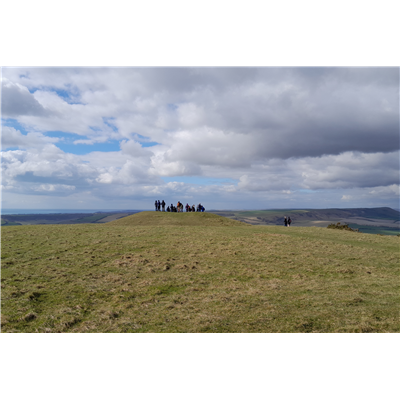 |
Gary Webster, Heritage Officer at the South Downs National Park, was a commercial archaeologist before joining the National Park. He has been working in the Changing Chalk Project for 2 ½ years and there is still another 18 months of the project to run. The chalk grassland of the South Downs is one of the most biodiverse habitats of NW Europe, with over 40 different species of flowering plants in just one square metre, including rare orchids. You will also find endangered birds, invertebrates, amphibians and reptiles. This wonderful habitat once stretched from Eastbourne to Winchester in a nearly unbroken tapestry, however, much of the ancient chalk grassland was ploughed up during the Second World War with just the hard to read steep banks, hill tops and escarpments left untouched. Nearly 80 years on little remains of the rare ecology. One of the Changing Chalk projects is working on the Eastern Downs to attempt to restore the remaining fragments and link them up once more; by reducing scrub and introducing conservation grazing using sheep, cattle and ponies, creating wildflower corridors and reinstating dew ponds. Already the project has restored rare and threatened species. For example, the Adonis Blue Butterfly has returned, when the only plant on which it fed, the horseshoe vetch, was reinstated. Gary quoted the last verse of Rudyard Kipling’s poem Sussex, to remind us of the splendor on our doorstep. God gives all men all earth to love, But, since man's heart is smal, Ordains for each one spot shal prove Beloved over all. Each to his choice, and I rejoice The lot has fallen to me In a fair ground-in a fair ground -- Yea, Sussex by the sea! The Chalk Grasslands were laid down 45 million years ago when the area was undersea and Coccolithophores fell to the sea floor to create the chalk layers and tectonic plates. These moved from Africa to Europe, creating the Alps and Downland England. Weathering wore away most of this chalk, leaving thin layers, which over the millennia were covered in soil and plants. The Downs are also rich in deposits of Flint. The project that Gary is involved with is identifying and documenting the archaeology of the Downs. His team has found evidence of human civilizations dating from the Neolithic Era (10,000 to 2,000 BC). Remains of flint mines were uncovered and flint tools. The fossils in these tools can identify the source of flint tools and so the team were able to confirm that these valuable resources were traded with northern tribes. The project discovered Bronze age settlements (2,500 – 800BC) surrounded by ditches, with hills used to bury the dead. Cissbury Ring was used as an old Iron Age (1,600 to 200BC) Hill Fort. The old ditches had been filled in and palisades built for defense. Devils Dyke was also an Iron Age Hill Fort. This did not need ditches for defense as its natural steep sides were sufficient. At Edburton Hill a mott-and-bailey was built in 1068. Sadly, this was used by the Army in WWII and significantly changed the structure. Erosion, vandalism and the action of burrowing animals such as rabbits have further degraded the ancient sites. The Project is endeavoring to protect these ancient monuments from further degradation. The Downs from Above project is mapping the area for Archaeological research by taking aerial photographs. Eventually it is hoped that these will be accessible to view on-line. These photographs disclose artefacts hidden from view at ground level. Buried buildings, walls, gardens can be seen, even old Roman Ponds. Another valuable resource is LIDAR (Light Detecting and Ranging) images. Laser images are taken from drones during winter, when the trees are bare of leaves, and the taking of multiple images permits the creation of 3D images. Gary ended the talk by showing us photographs of Devil’s Dyke from the 1800 to 1900 period, when it was a major tourist attraction. There was a cable car, a Funicular railway from Poynings, a single track, switch-back railway from Aldrington, a fairground, a camera obscura, an observatory and two bandstands; all very popular with day trippers. Leaflets were available of the Changing Chalk project with an illustrated map of the biodiversity of the Downs. Heather Stone |
|
| Saturday, 21 September 2024 |
| The countryside of East Sussex |
| Dan Fagan |
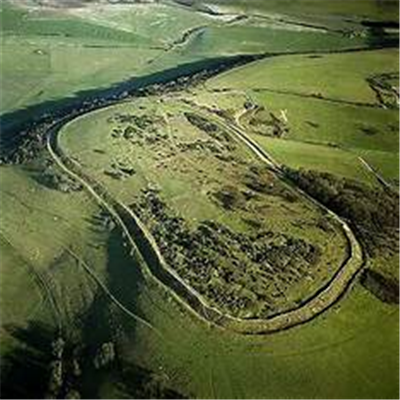 |
Talk by Dan Fagan - Lead Ranger - South Downs East Dan spoke about the decline in biodiversity and natural habitats on the South Downs, providing figures to show the decline in flora and fauna species since the 1970s. The first conservationist was Canon Hardwick Rawnsley, who in 1876 built a wall around his estate to protect nature, and who went on to found the Lake District Defence Society; but it was not until 1915 that Charles Rothschild promoted the idea that habitats needed to be conserved if we hoped to prevent further extinction of plant and animal species. He identified 284 local sites that were suitable for nature reserves and published the list in the book Prophet and Loss. As he was wealthy, he was able to promote the purchase of land to establish Nature Reserves, and also made donations to charities in support of conservation. Dan explained that one reason for the loss of biodiversity, was the action of the Government after the Second World War in encouraging farmers to increase food production by increasing the size of their fields, removing hedgerows and smaller pieces of land that had acted as stepping-stones for the movement of small animals, birds and insects. Changes to macro farming methods plus the wholesale use of chemical pesticides and fertilizers lead to the degradation of soil and destruction of habitats. This resulting significant loss in habitats lead to the extinction of species of pollinating insects, reducing the food available for many species of bird, which were the diet for small animals, which were prey for larger animals. Thus we experienced the wide extinction of species of plant and animals. A review undertaken by Professor Sir John Lawton in 2010, highlighted the need for a new approach which is having a profound difference to the wildlife, helping increase their numbers. The National Trust is working with many Charities and farmers in Sussex to support this alternative approach. The Changing Chalk Project is one example, where the National Trust is working to restore chalk diversity. One project is taking place in Gayles Farm in East Sussex. On the farm are the remains of two World War II runways. These have now been sown as a wildflower meadow with sheep grazing the chalk grassland around them. We also have places like Knepp Estate where Isabel Tree and Charlie Burrell have rewilded their 3,500 acre estate, establishing a biodiverse wilderness area in the low Weald of Sussex. They are now working to introduce beavers to the estate, to enhance the natural management of the rivers on the estate. Charities and farmers are now working together on the South Downs to help create wildlife corridors and alter the way the land is farmed, which provides hope for the future. The Big Chalk Programme was established in 2021; Natural England working in partnership with National Parks on chalk landscapes. New super National Nature Reserves are being established to link these corridors. The National Trust is working with partners such as South Downs National Park, Natural England, Sussex Wildlife Trust, The Living Coast, Kew Royal Botanic Park, Historic England, Buglife, Brighton & Hove City Council, Lewes District Council, Brighton & Hove Food Partnership Look out for the logo Sussex Grazed on meat products, the produce of local farms. We look forward to the next talk on the 26th of October where we will hear more about the Changing Chalk Project. Kathryn Best and Heather Stone
|
|
| Tuesday, 14 May 2024 |
| Delightful trip to Knole House |
| Joan Pimm and Barbara Lidbetter |
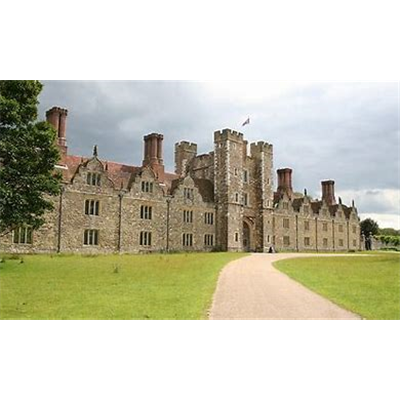 |
Although this property is only 30 miles from London, once you enter the imposing ornate gates and the travel along the winding drive, you are quickly immersed in this grand country estate. Our coach driver did a brilliant job squeezing his new vehicle through an extremely narrow space so to avoid hitting the metal of the gates. This is a one of the 5 largest houses in England as it occupies 4 acres in addition to the 26 acres of gardens and parkland. This property has seen 6 centuries of British History, so there was so much to see and learn. From Sir James Fiennes to the Archbishop of Canterbury to King Henry VIII to the many generations of the Sackville family – you had plenty to enjoy and absorb. We were welcomed by a National Trust staff member who gave us a useful introduction. The key piece of safety information was that although the grounds have lots of adorable fallow deer around close by, we were advised to keep our distance from them. As the weather was changeable, we either went straight to café or to the house. The food in the café was all made on the premises and it offered a good tasty varied menu. It is wonderful that you have the opportunity to walk along halls where Henry the VIII also trod. That is the beauty of the National Trust preserving these estates and that it allows us to enter into those historic times. A number of us climbed up the tower and enjoyed a spectacular view of the estate. Due to the car park being divided by logs, leaving the park presented another challenge to our driver. Having got on the coach, we then had to disembark so that he could drive a lighter vehicle around the obstacle course! Joan Pimm |
|
| Saturday, 04 May 2024 |
| AGM followed by a talk on Clandon Park |
| Mike Swaddling |
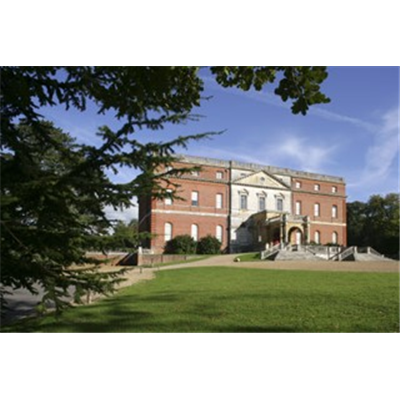 |
Mike Swaddling, who has spent many years volunteering at Clandon Park, gave us a talk on the history of this Grade One listed house. Most of you will be aware that a fire started in April 2015 and left the house a shell rather than this lovely statement mansion. Clandon Park has a long and rich history. It was once part owned by the crusading Knights Templar before being sold to the Onslow family in 1641 on the eve of the civil war. The story of Clandon Park House as we know it today began in the 1720s when the wealth and ambition of Lord Onslow demanded a new and fashionable mansion. In the 1730s, the house was designed by the Italian architect Giacomo Leoni and is a fusion of late Baroque style and early English Palladianism. This new house was designed to impress and to show the family’s wealth and influence. Marbled floors, columned walls, stuccoed ceilings, sculptures and silk embroidery were the order of the day. The ceiling in the Marble Hall was apparently jaw-dropping. The 19th century saw alterations and by the late 1800s, bathrooms and central heating were installed. In the first world war, the house became a hospital and in the second world war, a repository for documents. After the war, it was given to the National Trust. Refurbishment started in the late 1960s and uncovered much historic features including wallpaper from the 1740s. The fire was a major disaster and it was thanks to the fire brigade that some of the house is still left; and between volunteers and the fire brigade, many treasures were saved, though, sadly many treasures were lost. The National Trust is now committed to bringing the house back to life in one form or another, rather than rebuilding or demolishing. The building will be made safe; the interior will be conserved and used as a model of how buildings were made centuries ago; lifts, stairs and walkways will be installed so visitors can view in detail the make up of the building and see the countryside from the roof area. Jane McEwan |
|
| Tuesday, 16 April 2024 |
| Polesden Lacey outing by coach |
| Barbara Lidbetter |
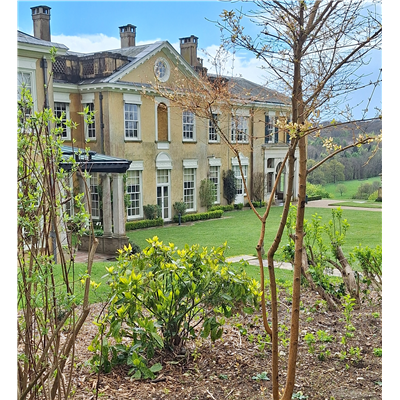 |
Our first coach trip for 2024 was to Polesden Lacey and it started off with a coffee stop at Denbies Vineyard, Dorking. Their 'train' met us from the coach as there was a long walk up their driveway, and the coach not being able to park any closer. If you have never been to Denbies then it is well worth a stop. Their coffee shop is sited in a huge conservatory, together with a very well stocked shop. On site there is also a farm shop, restaurant, and on the day we visited there was an art exhibition on the 1st floor too. We then travelled onto Polesden Lacey which is only 15 minutes further up the A24. Dodging the heavy showers some of us went for lunch, others decided to go on a tour of the house, while the bravest of souls ventured around the gardens. The grounds of this large estate cover over 1500 acres, with over 26 miles of footpaths for visitors to explore. When the Edwardian house was purchased in 1907 by Mrs Greville, it was almost new, and she furnished it lavishly with beautiful china and treasures. Walking down towards the house you can't help but notice the Pets Cemetery where there are 17 of Mrs Greville's dogs buried - many photos around the house are of the late owner and her beloved dogs. In the Dining room, there was a beautiful tureen in the centre of the table and one of the stunning plates. Name places around the table showed us what influential and famous visitors came to this house to dine. The Library is essentailly the same as when Mrs. Greville lived there and it was fascinating to study the framed photos of famous visitors. The architech who designed the Saloon was given the instruction to make it 'fit to entertain Maharajahs in'. I doubt any would have been disappointed! The Billard room was designed and furnished as a male sanctum, with the Smoking room and Gun room beyond. The smoking room had delightful colours and interesting furniture. It was an absolute joy to walk along the Picture Gallery under its beautifully detailed plaster barrel vault ceiling, and to study the various 17th-century Dutch and Flemish paintings of every day life, that hang on the oak panelling. It was a lovely day out and I think we all managed to dodge the rain during our visit to Polesden Lacey. Barbara Lidbetter |
|
| Friday, 22 March 2024 |
| Roman Sussex |
| Dr. David Rudling FSA, MCIfA |
 |
David Rudling gave us an interesting talk on how Sussex became Romanised. Romanisation happened through culture contact. The Romans viewed England as savages that needed to be ‘tamed’ – in much the same way the Victorians viewed the world whilst making it all very British. It ended up as a hybrid culture. Three million people were living in Britain when the Romans arrived. Some of the peoples in Britian were more advanced than others at that time. The official reason the Romans invaded in AD43 was to restore a king to his throne although it could be seen as one of liberation. The Romans arrived in the south at maybe Chichester or maybe a beach near Dover – the original invading party consisted of 24 thousand legionnaires, 24 thousand others as well as horses and supplies – a lot of men. They meant business. Very little is available in written form about the invasion and one written document exists in the Library at Herculanium. This document is now beginning to unroll and rot hence there may be missing pieces of history. Chichester Harbour would seem ideal for a landing due to its geography; a Roman helmet has been found there. One can ask if ‘romanness’ was only a veneer or did they really do lots for us? Water – the Romans gave us hot water and bath houses and hot water in homes with central heating (via under floor channels and in the walls). Sanitation and drainage Wine came from the Romans when they introduced grapes and processed them. They brought in new foods and plants. Laws became more systematised. Coinage took off during the Roman period. The quality of most things improved. Glass became very popular – vessel glass, window glass. The Romans gave us better building materials and changed our houses from round to square which made it easier for tiled roofs. They built roads, villas, baths and with all of this came TAXES. Roads were built – think Stane Street, Fosse Way etc. Communications Cities and towns where formerly there were just settlements next to a track. Farming Industry – ironworking, pottery, stone quarrying, timber/charcoal, salt. Temples, shrines and cemeteries. What a lot we have to thank them for! Jane McEwan |
|
| Saturday, 24 February 2024 |
| Take a journey to Titanic with me! |
| Rob Goldsmith |
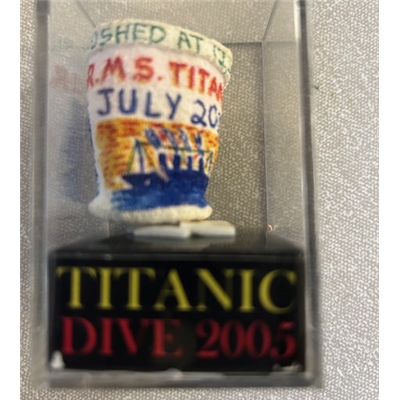 |
February’s talk was a very interesting two-part talk on the Titanic. Rob Goldsmith, has been fascinated with the Titanic since the age of eight when Robert Ballard discovered the wreck in 1985. Rob began his talk with a history of the ship and its fateful voyage. Though we all know of the accident, there are always new things to learn. Did you know that the men in the crow’s nest weren’t issued with binoculars? That the Marconi radio men worked on a commission basis, so they were more interested in sending the private messages than ship to ship ones, and thus missed crucial iceberg warnings from other ships. The flares sent up for help were misinterpreted by one ship as fireworks. From the inquiry after the awful accident, there were many improvements made to the way ships were equipped and staffed. The second half of the talk was about a trip in a submersible that Rob took down to the wreck of the Titanic. In 2005, Rob was lucky enough to have won a competition run by the History Channel, which gave him the opportunity to dive two and half miles down and visit the wreck of the Titanic. It was well illustrated with a video showing the deployment and sailing around the Titanic and then the retrieval. We saw the interior of the captain’s bathroom, intact windows, debris on the sea floor, including champagne bottles and closeups of the huge propellers. To illustrate the pressure at the seafloor, Rob took down some polystyrene cups, which consequently had all the air compressed out of them. The photo is of one of these cups, it measures just over an inch. It was a fascinating talk and one done with compassion and respect for the 1500 people who lost their lives. Kim Fairweather |
|
| Friday, 26 January 2024 |
| Petworth
(Talk to be held in the COTTON HALL) |
| Adam Hastie |
 |
We had a different room for our meeting this time as we sat in the Cotton Hall for our January talk by both Adam Hastie, General Manager for Petworth and their curator, Emily Knight. Adam opened the meeting with a quiz with a few facts about Petworth and other National trust properties. What he quickly learned was what a very knowledgeable bunch of people we are! The speed and accuracy that our audience answered all the questions stunned Adam. The National Trust has created a “Treasure House” program for 28 of its properties, of which Petworth House is one of them. This property certainly houses an extensive collection of paintings, including wonderful ones by J M W Turner. Emily Knight spoke about the “Beauty room” at Petworth, which acquired its name because of the 3 very large paintings of beautiful woman. They have made a start on cleaning one of these paintings and are looking to install lighting throughout the house to showcase the exhibitions and paintings to their finest. These tasks are not quick and need a lot of expert planning and are in consultation with a lighting designer. Of course, this needs financing. We look forward to the unfolding of each improvement. One of their boosts to their income was when the property and grounds were used for the setting of the film – Napoleon with Joaquin Phoenix. They received a tidy sum of around £400k from this. This was mostly spent on the high costs of painting the outside of the building. They are planning lots more events in the grounds and property starting with the Spring festival from 23rd March to 14th April 2024. For more details, please see the website Spring Festival at Petworth | National Trust They include a 2-day Makers Market, Talks and Demonstrations 23-29 March, Family Activities and Foraging Walks. There will also be creative walks and of course as it is Spring – we will be able to see a huge display of daffodils thanks to the 4000 new bulbs that their gardeners have just planted. Joan Pimm |
|
| Tuesday, 05 December 2023 |
| Christmas Lunch 2023 |
| Barbara Lidbetter |
 |
Our Christmas lunch this year will be at Casa Ciro's on Worthing's seafront. On Tuesday December 5th at 12:30 for 1pm. You can order a two or three course lunch. The menu can be found here: Casa Ciro's Menu Please make your choices and complete the booking form for either a 2 or 3 course lunch. Booking form can be found here: Christmas lunch booking form Forms will also be available at the Sept. 22nd meeting. |
|
| Friday, 24 November 2023 |
| Shoreham Fort |
| Gary Baines |
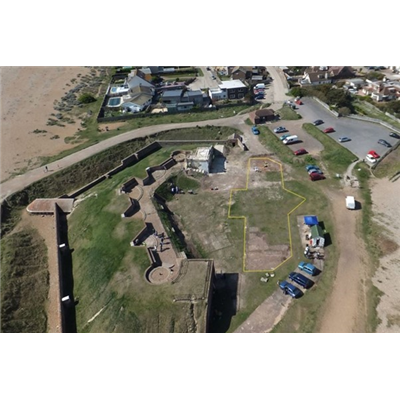 |
A most interesting and entertaining talk was given by Gary Baines from the Friends of Shoreham Fort. Gary first visited the site of the Fort as a 4 year old with his grandfather and it sparked an interest which became a passion. Little was known about the Fort until Gary stared investigating when he acquired his first computer in 1994. He has discovered a wealth of information over the years and was institutional in starting the “Friends of Shoreham Fort”, which is a charity kept going with Gary as the Chairman. The “Friends” have just been awarded the King’s Award for Voluntary Service; the award will be presented next year by the High Sheriff of West Sussex. What an honour! Shoreham Fort is a 19th century Scheduled Monument. It is situated at the eastern end Shoreham Beach and was built because of an anticipated invasion by the French. Littlehampton Fort was built but had design faults. The faults were corrected when Shoreham Fort was built. The water stored at Littlehampton Fort was tainted by sea water when the tide came in. At Shoreham, large water tanks were used instead to contain fresh water. There were 5 cannon placements at Littlehampton but at Shoreham, 6 guns were placed in a slightly different format enabling six guns to be fired in the same time it took 5 to be fired at Littlehampton (3 minutes). Using rifle cannons (a bullet shaped shell) at Shoreham meant that these cannons could pierce the hull of the French Ships. This type of cannon could also be fired to a distance of 4 000 yards. The fort was manned by the 1st Sussex Artillery Volunteers. There is so much more information on the Fort’s website – www.shorehamfort.co.uk: |
|
| Friday, 27 October 2023 |
| The Fabulous 50's |
| Delia Taylor |
 |
On a rather miserable, wet Friday afternoon, Delia Taylor came to talk to us about the 50s. I would think the majority of the audience could easily remember the 50s and thoroughly enjoyed the mix of fun facts, more serious memories and music and video clips. Lots of toe tapping. It was a real nostalgia trip for many of us – the fifties boasted a total population of about 50 million. On the whole, people were less stressed and obviously didn’t have phones and computers/tablets and tv’s to distract them. All the men were home from the war and thus it was a time of population growth together with a manufacturing boom. In the 1950s the UK accounted for ¼ of world manufacturing! The class system was still very much alive as illustrated by a video clip of John Cleese and the two Ronnies looking up and down at each other with Ronnie Corbett “knowing his place”! In 1951, the first soft toilet paper was made, the day time radio programmes were made for the ladies at home – remembering that once you were married, you stayed at home and took full responsibility for the running of the house and being a mother, ready to welcome your man home at the end of the day, looking as though you had been a lady of leisure all day! Amongst the popular evening radio shows were Dick Barton, Special Agent and of course The Archers – the only show still running. The most popular magazine was Tit-Bits with a circulation of 1,150,000 copies. Fashion also started changing particularly as the war time motto of ‘make do and mend’ had finished and money was available to buy clothes. The great London Smog of 1952 killed about 12,000 people and over 100,000 became ill. This led a few years later to the Clean Air Act in 1956. Records became popular and with it the rise of pop stars. Al Martino’s “Here in my Heart” was the first number one hit. TV came along – originally no-one owned a TV – they were all rented. Annual holidays became the thing to do – adverts abounded for Newquay and Blackpool. In 1957 Sputnik was launched by the Russians who beat the Americans in the space race. All in all a lovely talk reminiscing about the old days. Jane McEwen |
|
| Friday, 22 September 2023 |
| The View from the Wings: behind the scenes theatre gossip. |
| Brian Freeland |
 |
This will be a talk on backstage theatre gossip. Brian’s theatre career started in 1959 and has taken him to forty-four different countries including three residencies in the Middle East; eight tours of the Indian sub-continent and two circumnavigations of the globe.
He has worked with the Royal Shakespeare Company, the National Theatre, Scottish Opera,
Sadler’s Wells and London Festival Ballet Companies, Nottingham Playhouse,
Manchester Library Theatre and Joan Littlewood’s Theatre Workshop Company.
Approaching retirement he started to ‘branch out’ - directing; writing scripts, and giving Talks.
|
|
| Tuesday, 06 June 2023 |
| Visit to Mottisfont Abbey |
| Joan Pimm & Barbara Lidbetter |
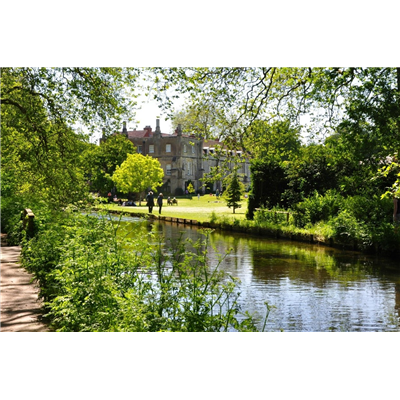 |
Mottisfont Abbey is a historical priory and country estate in Hampshire. Sheltered in the valley of the River Test, the site includes the historic house museum which features regularly changing art exhibitions. The gardens include a walled rose garden, which is home to the national collection of ancestral species and 19th Century rose cultivars, and a riverside walk. The priory is a Grade 1 listed building. Even if you have been before it is definitely worth another visit! Click here for booking form |
|
| Thursday, 18 May 2023 |
| 50th Anniversary Celebration |
| Jane McEwen |
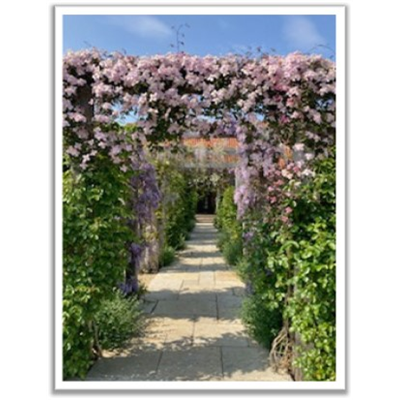 |
On a glorious May 2023 afternoon, members of the Worthing National Trust Association (WNTA) came together at the Pavilion Barn, Field Place, Worthing to enjoy a sumptuous tea to celebrate the 50th Anniversary of the association. Tables were laid out with celebration napkins and 50th sprinkles. Much missed was past Chair, Jean White, who was enjoying a wonderful holiday in warmer climes! Keith Forshaw welcomed everyone and advised that Congratulations Cards had been sent from a number of National Trust (NT) properties via NT Head Office but due to problems with the post, these were only received by WNTA the day following the tea. There is also a congratulatory letter from Hilary McGrady, Director-General, National Trust and this is on file with the committee. What a milestone to have been in existence for 50 years – we have managed to keep going despite challenging times – other areas have closed their supporter groups completely. The association received several cards and letters, including one from from Hilary McGrady (rolled and tied with gold ribbon) together with cards from the Regional Director of the London and South East Region, and the NT properties – Polesden Lacey, Hinton Ampner, Uppark House, Winchester City Mill, Ludshott and Selbourne Commons, Tyntesfield, Ightham Mote, South Downs West, La Ronde, Sheffield Park, Stourhead, Batemans and Bodiam Castle, the Yorkshire Dales team, the Calke Abbey team, Scotney Castle, and Wey and Godalming Navigation. We also received congratulations from NT Head Office, from Danielle Albrecht, Supporter Involvement Lead, Heellis (NT offices in Swindon), Standen and Nymans, Stowe, Cragside and Osterley Park. These cards are all an acknowledgement of the contributions of the Worthing Group and its members during many years of supporting the National Trust. Kris Sinclair, Senior Volunteering and Community Officer, South Downs, thanked the members for their generous contributions over the years – a total of approximately £170,000.00 – which has assisted many properties in the Southern area to purchase much needed equipment and items to assist in the running of the various properties. A strawberry cream tea was served together with cakes, brownies, flapjacks and macaroons and bottomless pots of tea and coffee as well as a bar for other drinks. A delicious 50th celebration cake had been presented to WNTA and was cut by the new Chairman, Kathryn Best. |
|
| Saturday, 29 April 2023 |
| AGM plus a talk about Slindon |
| Jane Cecil, leads the South Downs portfolio of National Trust properties. |
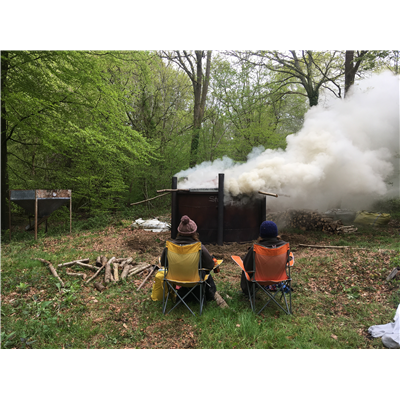 |
Please note the AGM starts at 2:15 Following the AGM, Jane Cecil, will be giving us a talk about the Slindon Estate, which is a 1,400-hectare spread of woodland, downland, farmland, and parkland, with countless historic landscape features and an unspoilt Sussex village. Jane leads the South Downs portfolio - 40 sites across 100 miles. From Harting to Belle Tout, from Swan Barn Farm to East Head and including Alfriston Clergy House, Monks House and the Burlington Gap. |
|
| Wednesday, 19 April 2023 |
| Visit to Ightham Mote |
| Joan Pimm & Barbara Lidbetter |
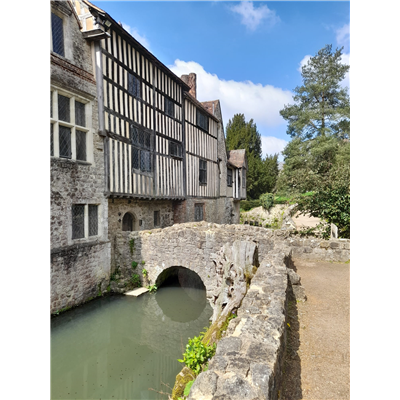 |
IGHTHAM MOTE – Visit on Wednesday 19th April For our first coach trip in 2023 we made a visit to Ightham Mote (a medieval moated manor house), which is hidden away in a secluded Kent valley. Parts of the original building date back to the early 14th century and it had been lived in until late in the 1990’s, when it was gifted to the National Trust. It was built using local ragstone and underwent various extensions by the many owners over the years, including a Mr Robinson (the last owner) who spent £10 million when stone was taken down, carefully numbered and then rebuilt in the same pattern. There are many Elizabethan fireplaces within the house, and many additional ones added in the Victorian era which are so very different in size and style and instantly recognisable when you tour the house. One of the volunteers at Ightham gave us a talk re: the history of the house prior to us taking a walk through many of the main rooms, and a lot of the original furniture is back in situ after being sold off to raise monies by a earlier owner then repurchased by Mr Robinson. He truly must have been both a very wealthy man and extremely fond of the house. In the grounds there is a north lake and a south lake, both of which are fed by natural springs and they give off an air of peace and tranquillity when you are wandering around the grounds. We spent several hours for our visit supplemented by cake and tea before we boarded the coach home. Barbara Lidbetter |
|
| Friday, 24 March 2023 |
| Jane Austen - her connection with Worthing |
| Sue Belton |
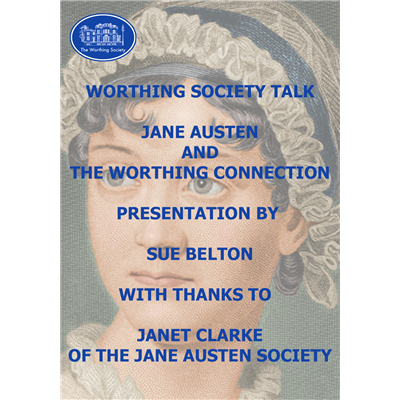 |
Talk 24th March by The Worthing Society. With an audience of 70+ members, Mrs. Belton, Chair of The Worthing Society, gave us an interesting account of Jane Austen’s visit and stay in Worthing. Arriving in 1805 with members of her family and aged 29, Jane resided at Stanford Cottage, very close to Warwick Street. Jane was one of 8 children whose father, Rev. George Austen, was constantly challenged financially to provide for his family. Fortunately, wealthy relatives did their best to support them. A relative, Jane Monk, of Buckingham House, Shoreham, probably made it possible for the Austens to visit Worthing. During her stay Jane developed many ideas and characters for her Sanditon novel and clearly used the Worthing topography and buildings for inspiration. The Worthing Society was formed in 1982 with the purpose of protecting and conserving Worthing’s buildings. We were informed that Worthing has 212 listed buildings and 26 conservation areas plus 750 properties of local interest. The Society is responsible for the installation of blue plaques and has developed a town centre Blue Plaque Heritage Trail. More details of this and the Society itself can be found at www.worthingsociety.org.uk |
|
| Friday, 24 February 2023 |
| The Worthing Journal |
| Paul Holden, Editor |
 |
Our talk last week was by Paul Holden, who is the founder and editor of the Worthing Journal. Paul, a journalist by profession, first published his monthly magazine in January 2011 with the aim to keep local residents informed upon events both past and present. The 'Journal' has proved very successful and has been the source of several campaigns to brighten up the seafront in particular. Paul cited the erection of flag poles flying both local and international flags that brighten up the seafront and which are replaced annually by his subscribers. Another success was the decoration of the window wind breaks along Worthing Pier and the pressure placed upon Worthing Council to maintain the seafront flower beds.The journal also organises an annual fund raising event -The Flingalong- which records the day back in 1901 when the SS Indiana sank off Worthing depositing thousands of oranges along our coastline. Paul is an enthusiastic supporter of controls over the ever increasing new Housing Developements, which threaten to take over our shoreline and downland open spaces. The talk ended with an enthusiastic questions and answers session with over 80 members present. By Keith Forshaw |
|
| Saturday, 14 January 2023 |
| Why was the shepherd delighted? |
| Bill Avenell |
 |
An upbeat and amusing talk was given by Bill to a hall full of folks who had braved the rain to come to Durrington. We are all involved with our weather patterns and the sayings that go with it. Dorothy Sayers said “Britain possesses no climate, only weather!” Our weather patterns are complex. Similar weather patterns occur in Japan – both countries are islands close to a continent and with a large ocean on the other side. There are four weather masses – wet, cold (North), dry and warm (south). Warm sea currents affect our weather. Both countries do not experience the continental effect - we have large areas of sea which heat up and cool down more quickly than land. Bill explained high and low pressure systems and the effect they have. The weather causes all sorts of phenomena. A halo around the sun or moon is a refraction of light through ice. So much information – too much to list here. So I shall highlight a few interesting details: The jet stream is a high velocity wind in upper atmosphere. It can knock 1.5 hours from a plane trip from North America to UK if the plane flies in the jet stream. Weather patterns have given rise to many sayings and social codes. Bell ropes twist in damp weather therefore it is said that rain is coming. Bell ropes are made of hemp which is very sensitive to moisture and thus they absorb more moisture – hence the ropes will twist and wet weather is on the way. Coffee bubbles – concave surface – bubbles in the centre of the cup means high pressure. If bubbles are at the side, it means low pressure. Fish bite least when the wind is in the east. When the east wind comes, it’s dry and in the dry, insects can fly higher and therefore the fish cannot get them. Swallows high, stays dry. Swallows low, wet will blow. This is accurate. Seaweed is supposed to tell the weather. Seaweed is full of salt which will swell when there is lots of moisture therefore rain IS coming. Scarlet pimpernel flowers will close up if there is moisture in the atmosphere. Likewise many plants react to differing conditions. The Oak before Ash saying may have been true in the past. Both trees set bud dependent on the amount of water in the atmosphere . Nowadays, with climate change, the oak is always out first. Red sky at night or red sky in the morning. Both are generally true – it is to do with the light rays and how much is filtered out by dust in the atmosphere etc. Jane McEwen |
|
| Wednesday, 07 December 2022 |
| Christmas Lunch 2022 |
| Joan Pimm & Barbara Lidbetter |
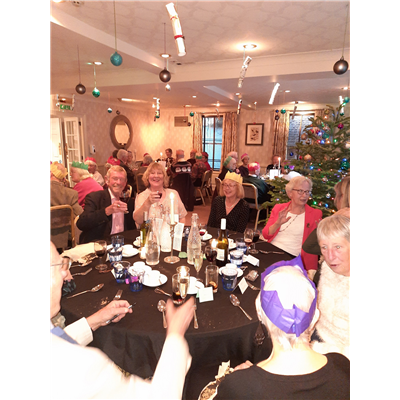 |
40 members recently attended a Christmas lunch held at the Addington Hotel. We were allocated the Eden Room for our private use, which was unexpected, but much appreciated. The room and tables looked very festive as we entered and Christmas music was played throughout our meal. A cocktail was offered upon arrival and Joan greeted them to advise which table they had been allocated, with name cards in place on each table. The meal was served with lots of fresh vegetables, lovely puddings and coffee to finish. A good time was had by all - and the photos to prove it! Our thanks to Joan and Barbara for arranging this event and for a fitting conclusion to their debut year of organising outings and socials. |
|
| Friday, 18 November 2022 |
| Worthing under attack during World War II |
| Chris Hare |
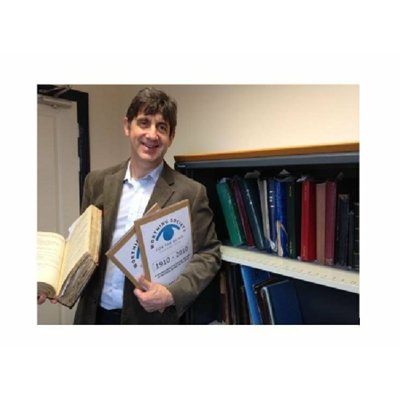 |
Our talk on Friday 18th November was delivered by local historian, Chris Hare,and entitled "How Worthing coped during the Second World War". Chris’s qualifications include a degree in History and Politics and an MA in Life History. It included many interesting facts: · Who could have known that Worthing was a hot bed for the black shirted fascist movement which was led by a Worthing councillor, one Captain Charles Bentick Budd. · several rallies where staged at venues such as the Pier Pavillion and, following one presented by Oswald Mosley, riots broke out in the town centre involving large numbers of locals who objected to the fascists pro-hitler stance. · in 1940 the first German bombs landed in Chapel Road opposite the town hall. Several other raids landed in South Street, Lancing and Haynes Road. The last raid featured a V1 flying bomb which landed in 1944. · in total more than 200 Worthing residents were killed during the war years along with mass destruction of property. This talk ended our talk series for 2022 Keith Forshaw |
|
| Friday, 21 October 2022 |
| Jack the Ripper |
| John Eddleston |
 |
Jack the Ripper Once again master story teller and author, John Eddlestone, kept us both entertained and enthralled at our October meeting. John, through his in-depth research of the "Ripper" murders noted that from six books written and published on the subject not one agreed with the number of murders nor its likely culprit. Having visited the sites of the murders in London’s East End and, having studied both Police and Press reports at the time John established that 6 women of ill-repute were his victims. The first was Mary Ann Nicholls a prostitute and the last on 9 December 1889 was Alice McKenzie. All had been found strangled with their throats cut and often disembowelled in the most gruesome manner. And although two people claimed to have sighted "Jack" the best description was that he was aged between 25-35, 5'6'' tall and had a brown moustache and hair. Upon one occasion he also wore a Deerstalker hat. In John's opinion the likely "Ripper" was a George Hutchinson who lived locally and whose family suspected him and threatened to report him to the Police unless he ceased his murderous activity. They did indeed stop and records show that Hutchinson left England to emigrate to Australia a few months later. Thanks also go to John's wife, Yvonne, who acted the part of one of his victims with such passion she was presented with an Oscar by John !! |
|
| Friday, 30 September 2022 |
| Sussex Landscapes - why so varied |
| Geoffrey Mead |
 |
We will take a look at the evolution of Sussex landscapes through their different geology, evolution and human endeavours. Featured will be places such as Pagham Harbour, North Laines in Brighton, the Hammer Pond at Knepp and Firle Place. Geoffrey Mead grew up in Brighton; he has an MA in Local and Regional History and a doctorate in Geography, studying Brighton’s inter-war suburban housing growth. |
|
| Wednesday, 06 July 2022 |
| Afternoon Tea at Haskins |
| Joan Pimm & Barbara Lidbetter |
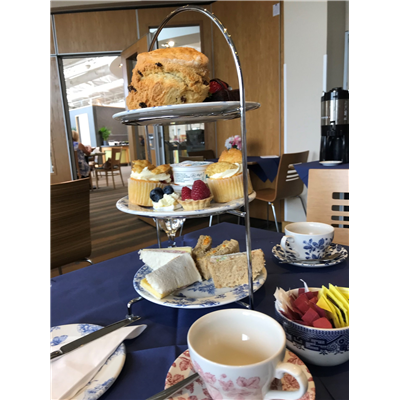 |
On a very sunny Wednesday afternoon a group of us took afternoon tea at Haskins Garden Centre. We were booked into a private room at the back of the restaurant. It was all set out and the air conditioning had made it a very comfortable and refreshing temperature. Staff were very helpful and of course also hardworking. Each tea comprised of sandwiches in both white and brown bread. The fillings were cheese and ham, tuna and mayonnaise and a spicy houmous one. There were cakes galore as you can see from the photograph which were all washed down by copious cups of tea. (Maybe that was just me!) Sadly, a few people were unable to make it on the day but the staff provided us with boxes so that their tea could be delivered by either their friend or partner. Also, my co-organiser, Barbara Lidbetter was taken ill but she too did not miss out on a box. More events to come……… Report and Photographs by Joan Pimm |
|
| Sunday, 01 May 2022 |
| Sissinghurst Castle Gardens |
| Barbara Lidbetter |
 |
The sun shone brightly for our first outing for three years, and we all boarded the coach in high spirits. We made a comfort stop at The Pantiles, Tunbridge Wells, and majority of us sat outside having a coffee and making the most of our newfound freedom. We then took the scenic route to Sissinghurst, which was very rural; lots of lovely green trees and bluebells along the way and new-born lambs in the fields (my first view of them this spring). And many views of oast houses which only confirmed that we were in Kent. Sissinghurst looked stunning in the sunshine, and we were all keen to stretch our legs and explore; some of us on returning visits, others new to the site. This was my first time of visiting during the Spring, so it was lovely to see different features in the gardens. A beautiful tree peony hiding behind a deep pink magnolia, fritillaries and tulips still in bloom and a stunning border of wallflowers in various colours. The famous white garden looked so peaceful, and I lingered here under the shade of the white wisteria in full bloom. We took a guided tour of the Garden Cottage where Vita Sackville-West and her husband Harold Nicholson lived during their time at Sissinghurst in the 1930’s. There were very many books, owned by both of them, hers mostly relating to gardening but his were more along the lines of diplomatic service histories and politics – Harold became an MP in his later years. We were taken upstairs to see both their bedrooms which made me feel that we were getting to know them on a more personal level. Both bedrooms had dual aspect views over their gardens and land, although Vita’s bedroom was more basic with the walls kept to bare brick. I came away from this cottage wondering why I had never seen it before, and I will want to revisit every time I go again to Sissinghurst. Text and photographs by Barbara Lidbetter |
|
| Friday, 01 April 2022 |
| Batemans |
| Joan Pimm |
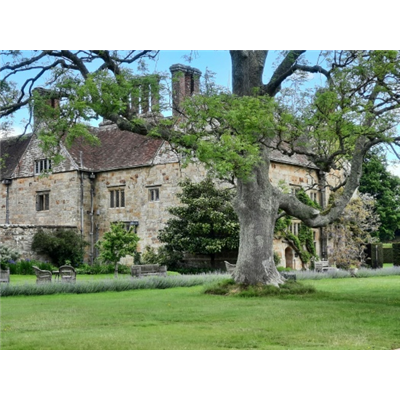 |
There were 39 of us that visited the beautiful House and Gardens that was once the home to one of our greatest writers, Rudyard Kipling, from 1902 until his death in 1936. Although, we were not sure exactly what the weather would be like, everyone came prepared to have a wonderful day out. As this stunning old sandstone house set in rolling Sussex countryside was not too far, we went straight there so that we could soak up the atmosphere before we got ‘soaked’ by the impending rain! Even though quite a few of the party had been before, there is so much to see in the house and grounds again and again. As there was blue sky when we arrived – most of the party enjoyed refreshments in the sunshine. The gardeners were busy working on the hedges, but it did not stop the local birds – blue tits, robins and chaffinches from eating our leftovers. Luckily most of our group were inside the house when the rain came but we hardly noticed as each room was full of the Kipling family’s possessions. Some of us were lucky enough to hear the Charleston dance music from an early phonograph. In Kipling’s study, you could feel his presence as there were so many of his personal things. It seemed like he would come back in at any moment. There were so many wonderful parts to the gardens, but my favourite was the lily pond. Kipling redesigned this after winning the Nobel Prize for Literature with his prize money of £7,700. A visit to Park Mill was definitely worth the extra walk as it has been beautifully restored. Kipling loved this Mill as it was incorporated it in his ‘Puck of Puck Hill’ stories. They say timing is everything as we were all back on the coach promptly just before the rain came again. This visit gave me a sense of peace as the setting is idyllic but also a desire to go back and see the garden again in another season. Report and Photographs by Joan Pimm |
|
| Friday, 01 October 2021 |
| Talks - Conservation Projects at Nymans and Standen |
| Zara Luxford |
 |
Zara Luxford, General Manager at Nymans and Standen gave us an insight on the latest conservation projects with which she is involved at these two properties. Following on from our AGM Zara took the floor to inform us of the never-ending task of maintaining these two substantial Sussex properties. Now back to attracting 500,000 visitors a year, but with Covid hitting attendances hard for two years prior income fell away dramatically. However, the ongoing costs of maintenance of the two properties and gardens continue apace. These were indeed very difficult times and with a much-reduced staff, matters reached crisis point. Zara informed us to catch up with maintenance a budget for the present year is a staggering £4 million. With shortages of both labour and materials urgent work was taking months rather than weeks to carry out. Zara went on to tell us of the tremendous efforts going into adapting the landscapes to cope better with climate change. This work not only takes care of fauna and flora but also the preservation of the hundreds of species of wild life living within the 700 hectares that the two properties cover. This was fascinating information which we members had little knowledge of. Zara's determination and obvious love for her work made a tremendous impact and members warmly applauded her courage and the fortitude of her now restored workforce and army of volunteers. Text by Keith Forshaw Photograph courtesy of Zara Luxford |
|